People ask us how to cut kids’ screen time without a nightly fight. We have three children, aged 15, 13 and 12. The honest answer is that it’s a continuous struggle. Some days, according to the kids, we are the worst parents in the whole wide world.
We’re not trying to get rid of screens. We want the kids to enjoy games and music while still having time for homework, sleep and the people in the room with them.
The phones lock at 7 pm
Our two older girls have phones. We use Google’s family controls to give each of them between one and two hours of phone time a day. The phones lock at 7 pm and stay locked until 7.30 am. Phones don’t go into bedrooms.
Our 12-year-old son doesn’t have a phone. He reminds us that other kids do, especially at gatherings, when he asks to borrow one of ours. We understand why he feels left out. We’re still trying to stay firm, even though he makes sure we hear every complaint.
The girls have some games installed on their phones. Those games come out of the same daily allowance as everything else; they don’t get a separate clock.
Homework stays in the family area
All homework is done in the dining or family area. The kids ask before using a laptop, and there’s no music while they study.
Music is easy to come by in our house. The kids have Google Nest speakers in their rooms. We have YouTube Premium to skip ads, and Spotify is available on phones and computers. Those options don’t change the homework rule or the limits on phones and laptops.
Dinner is phone-free too. It’s one part of the day when we want everyone listening to the same conversation.
Games are for the weekend
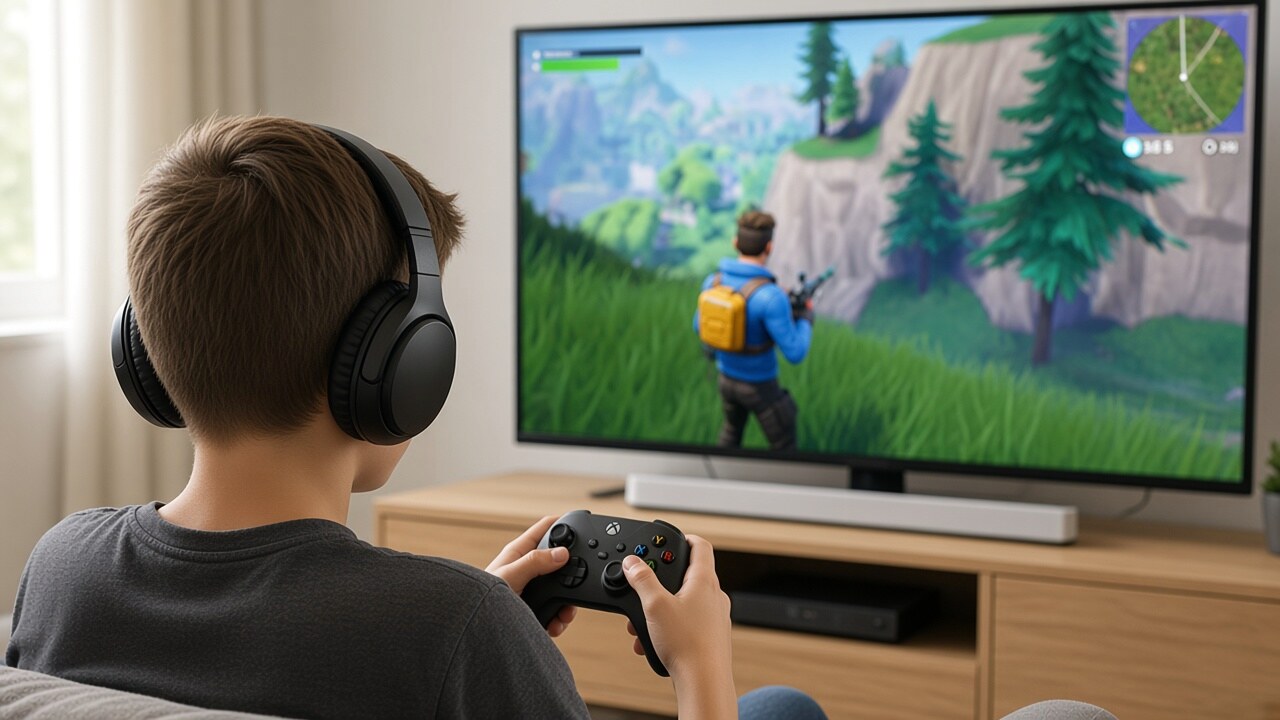
The consoles are where the TVs are, and the kids are allowed to play together on both during their limited weekend game time. We usually set aside two hours. Sometimes it stretches to three.
We can be a little lenient when they’re being reasonable with each other. We like seeing them play together. We also need them to accept that the session will end, even when there’s another game they could start.
Fortnite is only allowed on the console, and Roblox is only allowed on a laptop. We occasionally allow strategy games such as Age of Empires as well. The girls’ phone games remain inside their phone limits.
No headphones in the car
We don’t allow headphones or earbuds in the car. We don’t want the teens sitting beside us with noise-cancelling headphones, shut off from everyone else. They don’t have to chat for the whole journey, but we want them to be part of it.
That is what we keep coming back to with screen time. We’re happy for them to play games, listen to music and use their phones within the rules we’ve set. We also want them to manage a car ride, a meal or a stretch of homework without disappearing into a device.
The rules don’t end the arguments. Our son still wants a phone, the girls still want more time, and a two-hour gaming session sometimes becomes three. We keep working at it as a family. Some days that goes smoothly. Other days we hear all about what terrible parents we are.
What happens when a rule is pushed
We have Google Nest Wifi points around the house, which let us restrict internet access for individual devices through the Google Home app. If it looks as though a secret TV session or extra round of gaming is being planned, we can turn off the console’s internet access. Then it can’t connect to game servers or streaming services.
We do the same when game time has run over and the kids won’t cooperate with stopping. We’ve had to use that option less often over the years; they know what happens now. If the phone rules are abused, the consequence is a day or more without a phone. It doesn’t make us popular, but it means the limits are more than a timer they can ignore.
More on how we think about what kids watch when screens are on: How we review a film.