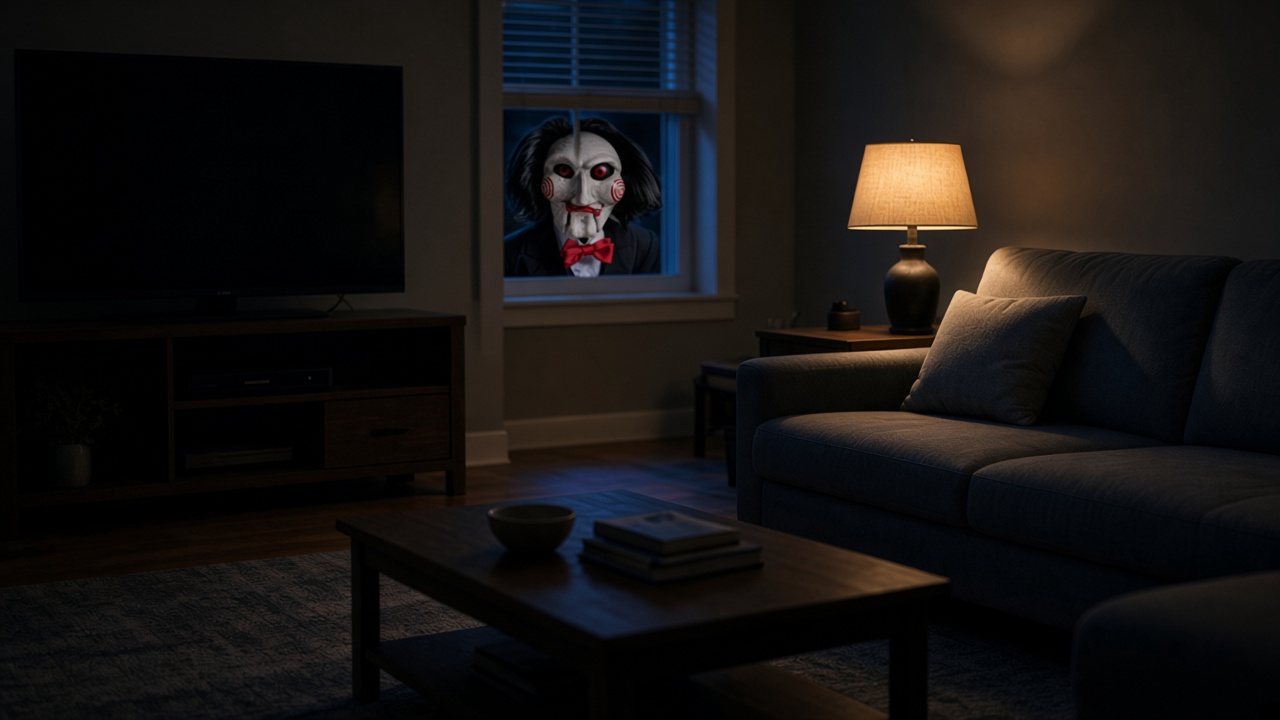
Parents keep asking what we mean when we say a film has fear that “sits in the room.” It sounds vague until you have watched one of those nights with a kid beside you. Then you know. This is the difference between a jump scare and dread, and why it matters for house rules.
Horror is not one flavour. Some films poke you. Some films stay with you. On ClearAge we try to say which kind of fear we are looking at, because a fifteen-year-old who laughs through a haunted-house ride can still have a rough night with the other kind.
What a jump scare is
A jump scare is the sudden bang. Loud sound. Face in the doorway. Something leaps. Your body flinches. Then, often, the room settles again. Kids know the pattern after a while. They cover their eyes, they giggle, they wait for the next one.
Jump scares can still be too much for a younger child. They can stack so hard that a soft kid does not want the lights off. But the fear is usually short. It lives in the moment. When the credits roll, a lot of families can shake it off with pizza and talk.
What “sits in the room” means
Dread is different. It is the mood that does not leave when the loud bit ends. The house on screen feels wrong. Someone is missing. A child is in danger. A manuscript says something you cannot unread. The story keeps pressing on the same sore spot.
That is what we mean by fear that sits in the room. After you pause the film, the feeling is still on the couch with you. In the car home. At bedtime. It is not only “that bit was loud.” It is “we cannot stop thinking about what that family was doing to each other.”
Parents feel it in their own chest first. If you are still tense twenty minutes later, your teen may be too, even if they say they are fine.
Why the split matters
Official ratings do not always split these cleanly. An MA 15+ or an R can cover both a loud creature night and a slow psychological one. The letter is the band. The kind of fear is why two films with the same letter can land so differently for your house.
On our guides, when we say the fear is jump-scare heavy, we are telling you the night may be intense but often peaks and drops. When we say the dread sits in the room, we are telling you the mood may follow your kid to bed. That is usually when we are slower to green-light a younger teen, or we want a parent on the couch.
A simple house check
Before you press play, ask two questions.
First: is this mostly going to startle us, or is it going to leave a stain on the evening? If you already know the answer from the trailer or the book, trust that.
Second: can this kid handle the after? Not the flinch. The quiet. If they still want every light on, or they keep asking whether that could happen in real life, dread was doing the work.
You do not need film-school language for this. If a night leaves the room heavier than when you started, that is the signal. Read the frightening notes on the guide. If we stacked child peril, coercion, or grief under that dread, take it seriously even when the poster looks like date-night thriller.
What we do at home
Loud creature horror with a clear “it is a movie” frame is sometimes fine for our older teens with us in the room. The slow ones that turn on missing kids, twisted families, or can’t-unread secrets wait longer. Same age band on the poster. Different night in our house.
If you are choosing between titles this season, do not only ask “is it horror?” Ask which kind. Jump scares you can often talk down. Dread that sits in the room needs a clearer yes from you before the tickets are bought.
More on how we weigh fear on a guide: How we review a film. For a current thriller where the mood does the heavy lifting, see Why Verity is 17+ on ClearAge.