People keep asking if the new true-crime film about the Unabomber is okay for a mid-teen, or whether the Australian M stamp is enough. Official labels stay on the page. Our call is 15+.
Open our UNABOMBER guide and you will see the split. In Australia the board stamp is M. In the US it is R. In the UK it is 15. ClearAge is 15+.
That is not us rewriting the board. M stays advisory. Fifteen is the youngest we would sit through this one with a kid beside us, knowing what is actually on screen.
What the night feels like
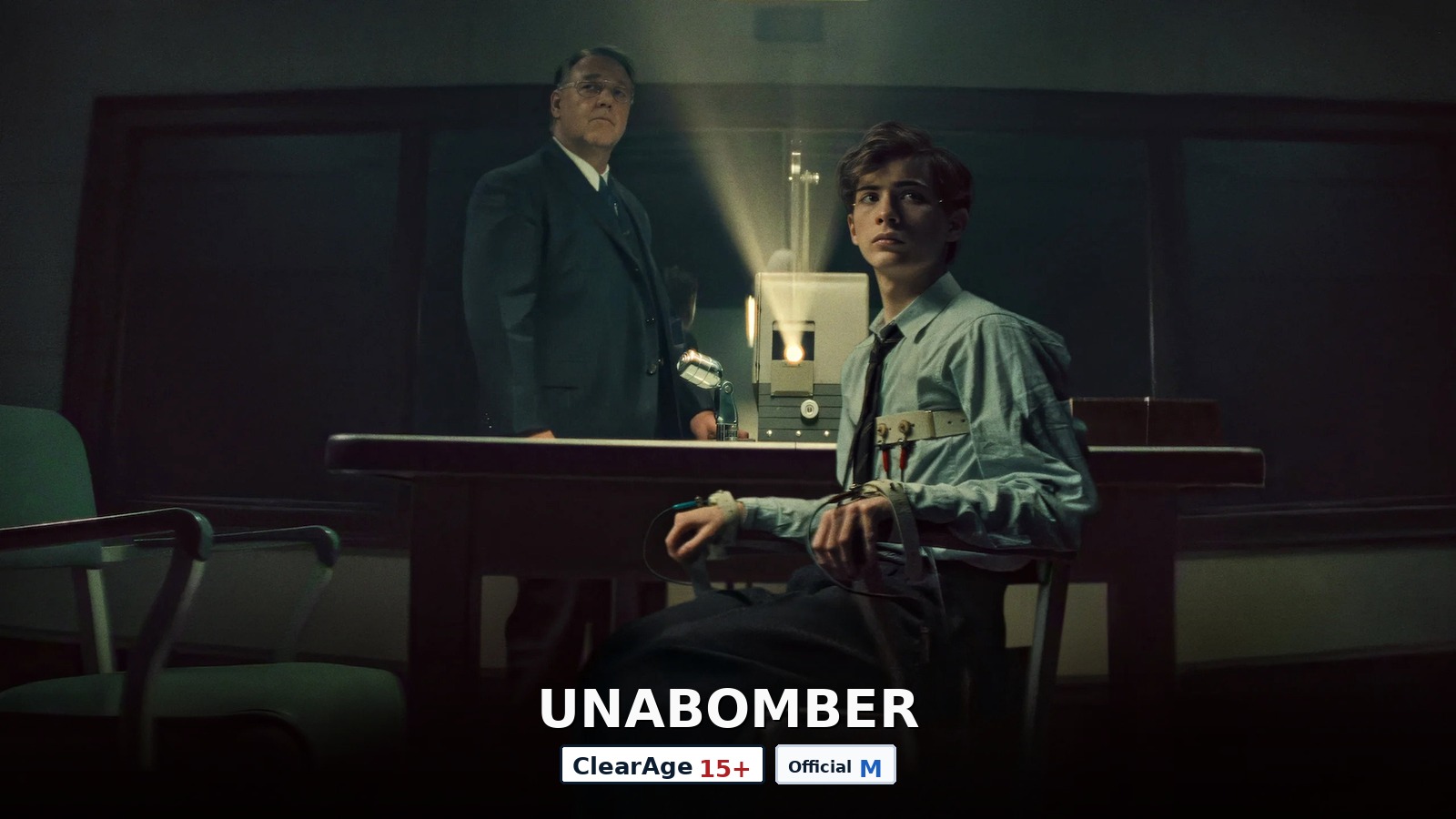
This is a serious true-crime drama. It cuts between a gifted teen at Harvard and the later FBI hunt for a mail bomber. Package explosions, talk of victims, and tense arrests sit beside long stretches of psychological pressure from teachers who put a young student through cruel experiments.
The mood is not jump-scare horror. It is true-crime dread that sits in the room: bomb threats, cabin raids, and the memory of those experiments. Isolation and damaged trust drive the character study.
Why we landed on 15+
The violence is moderate but serious. Mail bombs, deaths, and injuries drive the case. Impact comes more from threat and aftermath than from long fight scenes. Bomb aftermath and injury detail still matter. Agents move with guns during arrests.
A teenage math prodigy sits under adults who run harsh psychological experiments on him at university. You see how that power imbalance wears him down. Parents should know a minor is the one being put through it on screen.
Language is strong. The f-word turns up a lot in FBI rooms and raid moments, alongside the s-word, hell, and damn. Swear-sensitive homes will notice it early.
Official is M. We say 15+ because the bombings, injury detail, and mistreatment of a teen student stack into a heavier true-crime watch than a lighter M drama.
How we would decide at home
We marked it 15+ because those pieces stack. An older teen who already watches this sort of true-crime film may get through it. A younger teen used to lighter thrillers can come out of it more shaken than the M on the poster suggests.
If crime films about bombs, real-world harm, and adults abusing power over a teen are a no in your house, this one will not be an exception. Watch with a parent from about fifteen, and leave room to talk afterward about isolation, power, and real-world harm.
Method: How we review a film. For how board labels work next to our ages, see Why our age differs from the board.
Parent review
True-crime drama about a Harvard prodigy, harsh psych experiments, and a long FBI bomb manhunt
ViolenceModerate
Mail bombs, deaths, and injuries drive the true-crime story, and agents move with guns during arrests. Impact comes more from the threat and aftermath than from long fight scenes. Still a serious crime drama, not a soft thriller
LanguageStrong
The f-word turns up a lot in FBI rooms and raid moments, alongside the s-word, hell, and damn. Agents snap at each other under pressure, so the swearing feels sharp and workplace-rough. Swear-sensitive homes will notice it early
Sex / nudityMild
A brief kiss comes up in conversation, and that is about the extent of the romance. There is no sex scene or nudity to flag. Intimate content stays tiny beside the crime story
FrighteningModerate
Bomb threats, cabin raids, and the memory of cruel experiments keep a tight, uneasy feeling through much of the film. It plays as true-crime dread more than jump-scare horror. Younger teens may find the psychological pressure hard to shake
Child peril / abuseModerate
A teenage math prodigy sits under adults who run harsh psychological experiments on him at university. You see how that power imbalance wears him down over time. Parents should know a minor is the one being put through it on screen
Gore / death / weaponsModerate
Bomb aftermath and injury detail show up in the case story, and agents handle firearms during the hunt. Deaths are part of what viewers hear and sometimes see. Gore is not wall-to-wall, but the wounds still matter
Dangerous behaviourModerate
Bomb materials, suspicious packages, and raid talk sit inside the plot, including practical lines about what agents do when something looks wrong. Teens should not treat any of that as a how-to. It is crime procedure, not a stunt to copy
Mental healthModerate
Isolation, damaged trust, and the fallout from those experiments sit at the center of the character study. The film treats a troubled mind seriously without turning it into a tidy lesson. Families may want to unpack how loneliness and rage feed each other
Grief / bereavementMild
Someone mentions a funeral and a person who did not show up. Loss is a quiet beat, not the whole film. Sensitive kids may still catch the sadness in that line
Positive themesMild
The hunt side of the story values persistence, teamwork, and stopping harm before more people get hurt. Ambition without care is shown as dangerous. There is a clear cost to violence, even when the film stays in thriller mode
Role modelsMild
The lead investigator keeps pushing when others want to quit, and that grit is the closest thing to a role-model spine. Mentors on the campus side fail the young student badly. Mixed adults, one determined agent
Educational valueMild
Families who already follow true-crime history may use it to talk about domestic terrorism cases and research ethics. It is drama first, textbook second. Pairing it with calm facts afterward helps more than treating it as a full history lesson
Our take
This is a serious true-crime drama that cuts between a gifted teen at Harvard and the later FBI hunt for a mail bomber. Package explosions, talk of victims, and tense arrests sit beside long stretches of psychological pressure from teachers who put a young student through cruel experiments. Strong language shows up often in the bureau scenes. Watch with a parent from about 15, and leave room to talk afterward about isolation, power, and real-world harm
Full guide: UNABOMBER on ClearAge.